
Breaking down language barriers
Professor of Japanese Holly HK Didi-Ogren studies how gender, region, and social standing affect conversation.
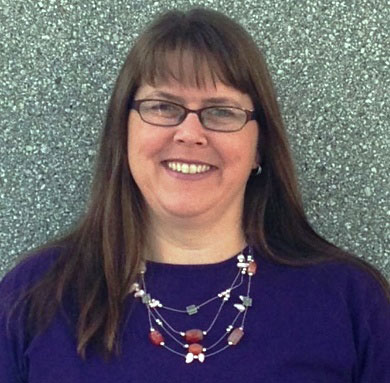
A professor for all levels of Japanese language, as well as for courses focusing on Japanese culture, Holly HK Didi-Ogren became fascinated with Japanese culture after a trip to the country in middle school. A linguistic anthropologist, Didi-Ogren examines the part language plays within the culture. She’s especially interested in the use of dialects and language patterns and how these shape cultural expectations and norms in Japan. “In English, if a colleague sees you in the hallway and he says, ‘How are you doing?’ he probably doesn’t really want to know; it’s just a formalized greeting,” Didi-Ogren explains. “But you wouldn’t know that if you just knew the literal words of the language…so there are patterns—sort of expectations—that can be read through language, and that’s broadly what I study.”
She is doing so this academic year in Hanamaki, Iwate Prefecture, through a long-term research fellowship from the Japan Foundation. Awarded to scholars with exemplary knowledge of and interest in Japanese culture, the fellowship provides recipients with funding to support an extended stay in Japan to conduct research on a topic related to Japanese culture.
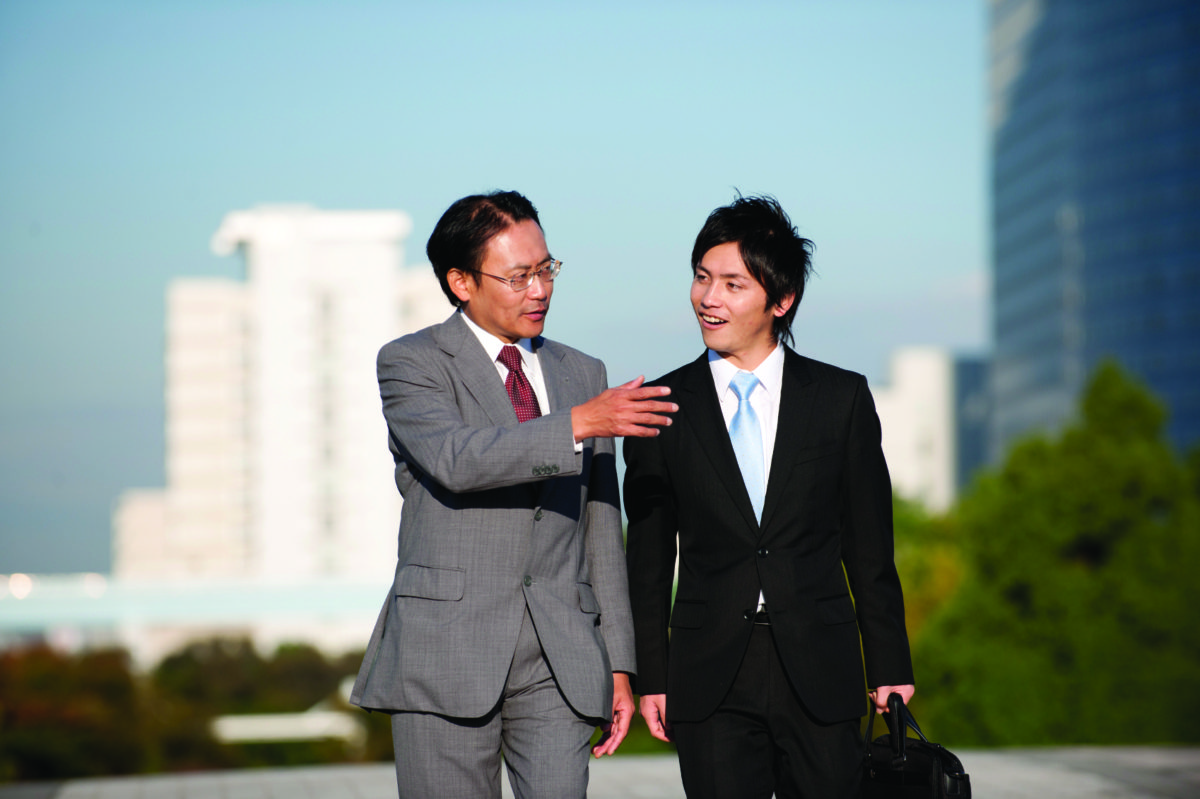
Didi-Ogren’s work focuses specifically on Japanese “speech levels,” examining how the language used in conversation changes depending on the age, social class, and relationship of the two speakers. By examining verb endings and deictic markers—words such as he, she, or it, whose meanings depend on context clues—she is observing shifts in formal and informal speech within conversations, and investigating the reason behind these shifts. She does so by observing natural conversation between individuals of different ages and social statuses, through the use of a video camera planted in a work area for an extended period of time.
“I’m kind of intervening in something [the participants] are already doing, of course with their permission, because I want to get data that’s as natural as possible. So, it’s not obstructive and it’s not something where people are talking to the camera or talking to the researcher.”
Didi-Ogren plans to use her research in Hanamaki as a “starting point” for doing similar research in other areas of Japan, hoping to ultimately compare conversation patterns from different regions of the country.
Posted on September 10, 2013