
A feather in their cap
TCNJ students collect a W in an inaugural birding competition.
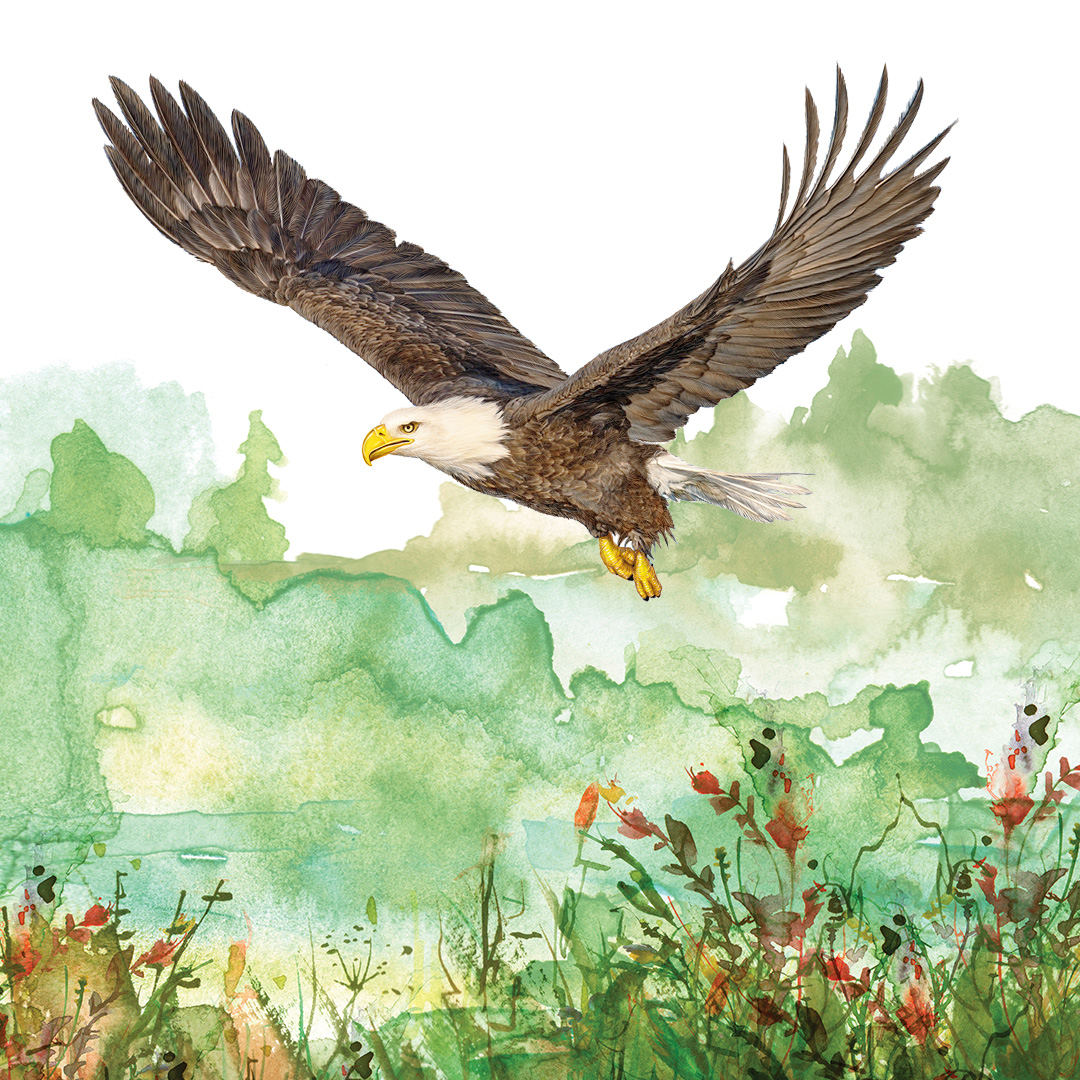
A flash of red in the branches, a swoop of brown amidst the leaves. Sometimes birding feels like a trick of the eye, until, suddenly — recognition. “It’s pure dopamine,” says Theresa Musto ’27 of the thrill of identifying a bird she’s never seen before. On a warm October day, Musto and four fellow students combed Central Jersey as part of the inaugural Wings Over Mercer Bird-A-Thon, a competition sponsored by the Wild Bird Research Group, a Pennington, New Jersey-based nonprofit that monitors bird populations in the state. The students traipsed across meadows and through swamps in search of their elusive winged quarry. Armed with binoculars and bird identification apps, they logged dozens of species, including rare waterfowl and a majestic bald eagle.
For the students — some old hands and some fairly new to birding — it was a day of excitement and elation. But the experience was also something more. It was a chance to step outside the classroom and see the world around them in a new way.
Biology professor Luke Butler first learned of the friendly competition through a colleague. Butler has studied birds for 20 years, examining how they respond to human impacts on the environment. For example, in a recent paper coauthored with TCNJ students, he revealed how Carolina chickadees display different molting patterns in areas with human activity. And it was through teaching an avian biology course that he first became interested in bird-watching himself. Over the years, he’s had students conduct surveys of bird populations on campus as a way to introduce field sampling techniques and wildlife conservation. When Butler heard about the bird-a-thon, he thought it could be fun if TCNJ fielded a team. “I knew some students who enjoyed birding as a personal pursuit,” he says. “And I thought they might like the college spirit aspect of being on a team together.”
Musto, a biology major, was one of the first students he asked. She had taken a class of his the previous summer that explored birding from the perspective of biologists. Musto then quickly texted her cousin Elizabeth Italia ’28, a computer science major who had also taken the class. Musto suggested it’d be something fun the cousins could do together. In fact, they had already been dabbling in birding together. Italia had initially picked up the hobby as a way to pass the time during the COVID-19 pandemic, walking around the lake near her home and making lists of birds she saw. “I’ve identified about 150 species of birds in the last five years,” she says. She’d often rope her cousin Musto into joining her excursions.
“I joked about it being like Pokémon at first,” Musto says, referring to the trading card game that involves collecting exotic creatures. “Collecting birds is so much fun. Plus, birds are cute.”
To round out the bird-a-thon team, Butler also reached out to one of his advisees, Lyndsay Williams ’27, who had an interest in bird feathers, and to senior biology majors Shira Weiss and Nancy Dominguez, who had previously borrowed binoculars from him to go birding together and then they sent him a slide show about it.
The team, which dubbed themselves the TCNJays, was up for the challenge: Identify as many bird species as possible in one day across a variety of habitats from wetlands to forest edges to open fields. The effort was meant to raise awareness for bird conservation and contribute data to help scientists better understand migration patterns.
They set off at 7 a.m. on October 4, stopping first at Mercer Meadows in Lawrenceville and tagging more than 30 species, including bobolinks, which are migratory songbirds with a distinctive black-and-white pattern.
Next, they hit Rosedale Lake in Pennington, where they spotted the bald eagle, perched over the water on telephone wires. “We set up a scope,” says Weiss. “People came by, asked what we were doing, and then we let them look as well. Maybe we were inspiring others.”
For Williams, the highlight was bushwhacking through the woods at the Delaware Canal State Park, where she spied a small shorebird called a lesser yellowlegs. “I was always the one going off the path, looking around corners,” she says.
The team logged all the birds that they saw in eBird, an online database of bird observations that helps to provide information about the ranges of species to avian biologists. They also used the app Merlin to recognize bird calls and tag birds they weren’t able to see (permissible under the event rules), including a small, camouflage-savvy bird called a brown creeper. At the end of day, the team recorded 54 species (many seen on these pages), enough to win the student category of the competition.
“I was shocked,” says Williams. The TCNJays all plan to continue birding as a hobby, finding it a welcome respite from tests and homework. “With all our classes nowadays, we’re so focused on our screens,” says Italia. “Birding is a stress reliever and opportunity to get outside.”
That even goes for Dominguez, who is mostly interested in microbiology. “I don’t typically get to connect with nature in the lab,” she says. “It’s nice to experience a different side of biology.”
Butler has seen similar transformations in students in his classes, as they awaken to the birds that have always been around them. They’ll suddenly see a bird overhead — say, a common grackle — and point it out to friends and family. “It forever changes their relationship to their environment,” he says. “They’ll be in places they’ve been their whole life, and then they’ll go birding in that place and see it in a whole new way.”
Illustration: Shutterstock
Posted on January 28, 2026